|
|
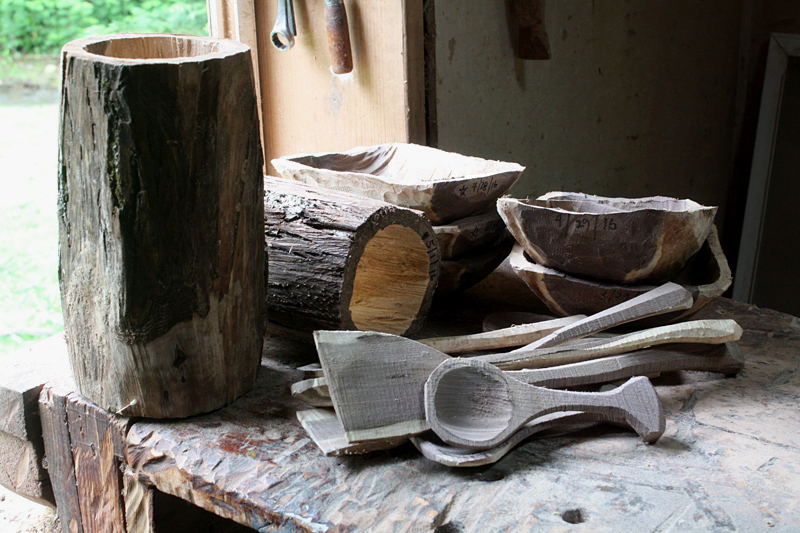
The treenware pieces pictured
above have been roughed out from a black walnut log using an array of power
tools: electric chainsaw, band saw, and a chainsaw disc on a side angle grinder.
A more detailed description of this process, including sequence images, is
described in this post.
Upon reaching this stage each piece is dated and allowed to dry before refining
and finishing. The drying time varies depending on the amount of wood remaining
on each piece and the risk of cracking. For spoons, a month will do, at least
three months for bowls, and for crocks, six months or more is best.
I prefer to rough pieces out when the wood is green, that is, freshly cut and
with a high moisture content, and then finish them when they're dry or seasoned,
and the drier the better. Wood is softer when it's green, working more easily,
and then sands and takes a finish much better when it's dry. Also, removing most
of the wood and then letting the piece dry greatly reduces the drying time and the
chance of cracking or warping. If it's still going to crack, which still occasionally
happens, better to have it happen at his stage, which represents a small percentage
of the total time that the piece will require.
I like to have a large selection of pieces roughed out in advance and at times back in the old days, I might have fifty crocks, fifty bowls and over a hundred utensils on the drying shelves at once. And it wasn't unusual to have pieces on the shelves that dated back a year or more.
|
|